Silk Fabric Types in India: Regional Specialties...
Explore India's rich silk heritage! Discover regional silk fabric types and their unique characteristics. Learn how StitchMagic, used by 5,000+ sellers, help...
Silk Fabric Types in India: Regional Specialties
Silk Fabric Types in India: Regional Specialties India boasts a rich and diverse silk heritage, with each region crafting unique silk fabrics celebrated for their distinct textures, weaves, and embellishments. StitchMagic, used by 5,000+ sellers, empowers businesses to showcase these exquisite silks online, leading to a 40% increase in customer conversion. This powerful AI business tool helps sellers create stunning visuals and detailed catalogs, bridging the gap between traditional craftsmanship and the digital marketplace. Discover how this WhatsApp catalog maker is transforming the Indian silk industry.

The Problem: Bridging Tradition and the Digital Age
India's textile industry is a behemoth, valued at over ₹12 lakh crore. However, despite its size and historical significance, a significant portion of the industry struggles to adapt to the demands of the modern digital marketplace. A major challenge lies in effectively showcasing the beauty and intricacies of silk fabrics online. 85% of sellers still rely on physical samples to display their products, a method that is both time-consuming and geographically limiting. This reliance on physical samples creates bottlenecks in the sales process, preventing businesses from reaching a wider audience.
Consider the traditional process: a potential buyer must physically visit a store, browse through countless fabric swatches, and try to imagine the final product. This process can take days, or even weeks. In contrast, with AI-powered tools like StitchMagic, a seller can create a professional-quality catalog in a matter of minutes, showcasing their entire collection to customers around the globe. The difference is stark: 3-5 days with traditional methods versus 30 seconds with AI.
Furthermore, the inability to provide customers with realistic visualizations often leads to lost sales. Customers hesitate to purchase fabrics online when they cannot accurately assess the color, texture, and drape. This problem is particularly acute during peak seasons such as Diwali and wedding season, when demand is high and competition is fierce. The lack of digital tools also hinders India digital marketing efforts, making it difficult for businesses to effectively target and engage potential customers. The solution lies in embracing AI-driven solutions that can bridge the gap between tradition and technology, empowering businesses to thrive in the digital age.
The Solution: StitchMagic and the Power of AI for Silk Businesses
Here’s a step-by-step guide to using StitchMagic to revolutionize your silk fabric business:
- Photograph Your Fabrics: Begin by taking high-quality photographs of your silk fabrics. Ensure that the lighting is even and that the colors are accurately represented. Use a neutral background to avoid distractions. StitchMagic's AI photo enhancer can automatically improve the quality of your images, correcting imperfections and enhancing details. This is crucial for showcasing the true beauty of your silks, whether they are from Surat, Varanasi, or any other weaving center.
- Upload to StitchMagic: Create an account on StitchMagic and upload your fabric photos. The platform supports various image formats, making it easy to import your existing collection. The StitchMagic platform is designed to be user-friendly, even for those with limited technical skills. The intuitive interface guides you through the process, ensuring that you can quickly and easily create a professional-quality catalog.

- Use the Background Remover: Remove distracting backgrounds from your fabric images using StitchMagic's background remover tool. This feature automatically detects and removes the background, leaving you with a clean, professional-looking image that focuses solely on the fabric. This is particularly useful for showcasing intricate designs and textures, allowing customers to appreciate the craftsmanship of your silk fabrics.
- Create a Catalog: Use StitchMagic's catalog maker to create a stunning digital catalog of your silk fabrics. Add detailed descriptions, pricing information, and any other relevant details. The catalog maker allows you to customize the layout and design, ensuring that your catalog reflects your brand identity. You can create separate catalogs for different types of silk fabrics, such as Banarasi silk, Kanjeevaram silk, and Mysore silk.
- Share on WhatsApp: Share your catalog directly with customers via WhatsApp using StitchMagic's WhatsApp catalog maker. This feature allows you to send a link to your catalog to individual customers or groups, making it easy for them to browse your collection and place orders. WhatsApp is a popular communication platform in India, making it an ideal channel for reaching a wide audience. This is a game-changer for businesses in cities like Mumbai and Jaipur, where WhatsApp is ubiquitous.
- Utilize the Fabric-to-Design Feature: Allow customers to visualize your fabrics in different designs using StitchMagic's innovative fabric-to-design feature. This feature allows customers to upload a photo of a garment or design and see how your fabric would look in that design. This is particularly helpful for customers who are unsure about which fabric to choose. This feature significantly enhances the customer experience and increases the likelihood of a sale.
- Leverage AI-Powered Recommendations: StitchMagic's AI algorithms analyze customer preferences and provide personalized recommendations. This helps customers discover new fabrics that they might be interested in, increasing the chances of a purchase. The AI also learns from past sales data, helping you to identify popular fabrics and trends. This information can be used to inform your inventory decisions and marketing strategies.
- Track Your Results: Monitor the performance of your catalogs and marketing campaigns using StitchMagic's analytics dashboard. This dashboard provides valuable insights into customer behavior, allowing you to optimize your strategies and improve your results. Track metrics such as catalog views, click-through rates, and sales conversions. This data-driven approach ensures that you are making informed decisions and maximizing your ROI.
- Integrate with StitchMagic's AI business tool: Connect StitchMagic with other business tools like StitchMagic's AI business tool to streamline workflows and automate tasks. This integration allows you to manage your inventory, track orders, and communicate with customers all in one place. This is particularly beneficial for businesses that are looking to scale their operations.
- Engage on Social Media: Promote your silk fabrics on social media platforms using images and videos created with StitchMagic. Share your catalogs on Facebook, Instagram, and other social media channels to reach a wider audience. Use targeted advertising to reach potential customers who are interested in silk fabrics. Social media is a powerful tool for building brand awareness and driving sales.
Comparison Table: Traditional vs. AI-Powered Catalog Creation
| Feature | Traditional Method | AI-Powered Method (StitchMagic) |
|---|---|---|
| Time to Create | Days/Weeks | Minutes |
| Cost | High (Photography, Printing, Distribution) | Low (Subscription-Based) |
| Reach | Limited (Geographically Restricted) | Global |
| Customization | Limited | High (Fully Customizable) |
| Visual Quality | Dependent on Photography Skills | High (AI-Enhanced Images) |
| Customer Experience | Inconvenient, Time-Consuming | Convenient, Engaging |
| Scalability | Difficult to Scale | Easy to Scale |
| Analytics | Limited or Non-Existent | Comprehensive Analytics Dashboard |
Regional Silk Specialties in India
Banarasi Silk (Varanasi)
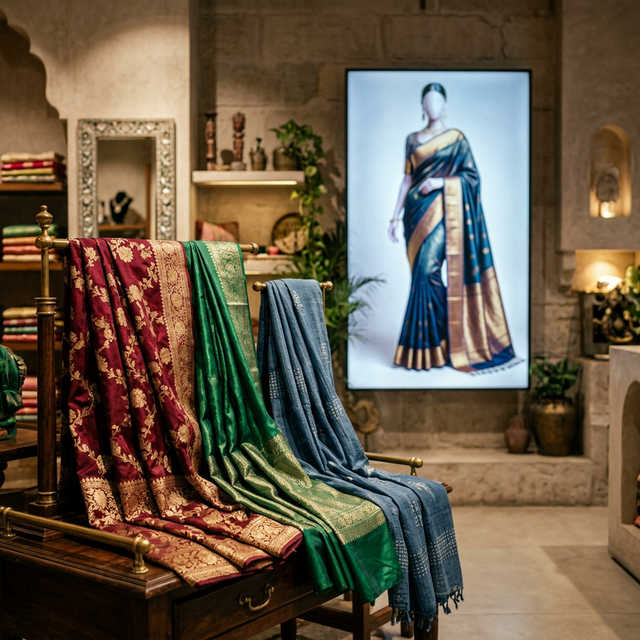
Banarasi silk, originating from Varanasi, Uttar Pradesh, is renowned for its intricate brocade work and opulent designs. These silks are often adorned with gold and silver threads, making them a popular choice for weddings and festive occasions. The motifs typically include floral patterns, paisleys, and geometric designs. Banarasi silk sarees are considered heirlooms, passed down through generations. The use of StitchMagic's WhatsApp catalog maker allows Banarasi silk weavers to reach customers across India and the globe, showcasing their exquisite craftsmanship.
Kanjeevaram Silk (Kanchipuram)
Hailing from Kanchipuram, Tamil Nadu, Kanjeevaram silk is distinguished by its rich colors, heavy silk fabric, and elaborate zari work. These sarees are woven with pure mulberry silk and are known for their durability and luster. The borders often feature contrasting colors and intricate designs, such as temples, animals, and mythological figures. Kanjeevaram silk sarees are a symbol of South Indian culture and are worn during weddings and other auspicious events. StitchMagic helps Kanjeevaram silk businesses to create visually stunning catalogs, highlighting the intricate details of their sarees.

Mysore Silk (Mysore)
Mysore silk, from Karnataka, is known for its smooth texture, lightweight feel, and subtle sheen. These silks are made from pure silk and are often dyed in vibrant colors. Mysore silk sarees are characterized by their simple yet elegant designs, making them a versatile choice for both casual and formal occasions. The use of gold zari is minimal, adding to the understated elegance of the fabric. Mysore silk businesses can leverage India digital marketing strategies, supported by StitchMagic, to expand their reach and attract new customers.
Other Notable Silk Varieties
Besides these prominent types, India also boasts other regional silk specialties, including:
- Tussar Silk: A wild silk known for its textured appearance and golden hue.
- Eri Silk: A peace silk produced without harming the silkworm.
- Muga Silk: A rare golden silk from Assam, known for its durability and natural luster.
Expert Quote
*"Fabric sellers lose 60% of potential customers because buyers cannot visualize the finished garment. StitchMagic solves this problem by enabling sellers to create realistic visualizations and engaging catalogs." — Priyanka Gadi, Founder, StitchMagic*
FAQ
- [Try StitchMagic Free](/vendor/login?mode=signup)
Is StitchMagic free to use?
StitchMagic offers a free trial period. Paid subscription plans start at ₹499 per month, offering additional features and benefits.
Does StitchMagic work on WhatsApp?
Yes, StitchMagic has a dedicated WhatsApp catalog maker that allows you to easily share your catalogs with customers on WhatsApp.
Can I remove the background from my fabric images?
Yes, StitchMagic has an AI-powered background remover tool that automatically removes backgrounds from your images, creating a clean and professional look.
Does StitchMagic help with fabric design?
Yes, StitchMagic has a fabric-to-design feature that allows customers to visualize your fabrics in different designs, enhancing the customer experience and increasing sales.
What types of fabrics does StitchMagic support?
StitchMagic supports all types of fabrics, including silk, cotton, linen, and more. It is designed to be versatile and adaptable to the needs of any fabric business.
How does StitchMagic help with India digital marketing?
StitchMagic provides tools and features that enable businesses to effectively market their products online. This includes creating visually appealing catalogs, sharing them on social media, and tracking the performance of their marketing campaigns.
Can I create saree catalogs with StitchMagic?
Yes! StitchMagic provides tools to create saree-specific catalogs with all the details customers need to make a purchase.

Ready to transform your silk fabric business with the power of AI? Explore the endless possibilities with StitchMagic!
- [Fabric to Design](/vendor/login?mode=signup&action=visualize&source=blog_content)
- [Catalog Maker](/catalog-maker)
- [Background Remover](/background-remover)
- [Saree Catalog Maker](/saree-catalog-maker)
- [WhatsApp Catalog Maker](/whatsapp-catalog-maker)
- [AI Photo Enhancer](/ai-photo-enhancer)
- [Gallery](/gallery)
- [Blog](/blog)
Transform Your Fabric into Stunning Designs
Visualize your fabric as a finished Saree, Lehenga, or Suit instantly with StitchMagic. Perfect for designers, boutiques, and fabric lovers.
Related Guides

AI Tools for Fashion Designers in India: Fabric Visualization, Client Presentations, and Lookbook Creation
Best AI tools for Indian fashion designers. Fabric visualization on garments, client customisation previews, digital lookbook creation, and made-to-order workflow. Free to start.

How to Sell Handicrafts Online: WhatsApp + Etsy + Instagram Guide for Indian Artisans
Complete guide for Indian artisans on how to sell handmade products online via WhatsApp, Etsy, and Instagram. AI tools for handicraft photography, catalog creation, and marketing.
Fabric Se Suit Kaisa Dikhega? AI Visualization Guide
Fabric se suit kaisa dikhega? Confused? StitchMagic, used by 2,000+ sellers, helps visualize! See your designs come to life & boost conversions by 40%. Try now!